

Last Updated: November 19, 2026
Quick Summary
Improving 7.3L Powerstroke fuel economy starts with a baseline: fill the tank, note the odometer, drive your normal week, and divide miles by gallons. From there, fix filters, fluids, and tire pressure first, then sharpen driving habits, and add an economy tune as the biggest single lever. Change one thing at a time and recheck MPG after each change.
- A programmer chip changes the PCM's fuel and timing maps, and an economy tune leans out fuel delivery for steady cruising.
- Aging MAP, EBP, and IAT sensors can drag fuel economy down without ever throwing a check engine light.
- Taller tires make your odometer read low, so correct for it before trusting any MPG baseline.
- Keep the engine in its efficient range, ease off the throttle, and cut idle time to save fuel.
- A stock-size, properly inflated all-season tire is usually the cheapest MPG mod you will ever make.
Table of Contents
- Start With a Diagnostic Baseline Before You Change Anything
- Air Intake and Exhaust Upgrades That Actually Help 7.3L Powerstroke Fuel Economy
- Tuning and Programmer Chips for Better MPG
- The Impact of Tire Size on Diesel MPG
- Maintenance, Fluids, and Driving Habits That Cut Fuel Use
- Pick Your Tune and Start Saving Fuel
- Frequently Asked Questions
Start With a Diagnostic Baseline Before You Change Anything
Before you buy a single part, get a baseline. Improving 7.3L Powerstroke fuel economy starts with knowing what your truck actually does right now, not guessing.
Most owners skip this step. Then they bolt on parts and have no idea whether anything helped. We see it constantly: a truck that "feels better" but burns the same fuel.
A baseline also catches problems that kill MPG before mods can help:
- Check for stored codes. A weak sensor can drag fuel economy down without a check engine light.
- Inspect the fuel filter. A clogged filter strains the whole fuel delivery system.
- Look at tire pressure. Low tires add rolling resistance and cost you fuel.
- Note your driving mix. City, highway, and towing weeks are not comparable.
If you are weighing whether a chip is worth it on an older, higher-mileage truck, read Is a 7.3 Power Stroke Chip Worth It for an Older Truck? before you spend anything.
Watch out: chasing big MPG gains on a worn engine is wasted money. Fix the baseline first.
Air Intake and Exhaust Upgrades That Actually Help 7.3L Powerstroke Fuel Economy
Airflow is the foundation of combustion efficiency. A 7.3L Powerstroke needs clean, unrestricted air in and a free-flowing path out. Get either side wrong and you lose fuel economy before you ever touch a tune.
Air Intake and Filtration
A dirty or restrictive air filter forces the engine to work harder for the same airflow. Start with a fresh filter, then decide if an aftermarket intake is worth it. A quality intake can improve airflow and turbo spool, but the gains are modest on a stock truck. Skip the cheap kits that pull hot air from the engine bay.
Exhaust System and Backpressure
Exhaust backpressure is the resistance that trapped gases create against the engine. Lower it and the turbo spools easier, which helps both power and fuel efficiency. A larger downpipe and free-flowing exhaust are common upgrades. Keep in mind that noise is not power. A louder system that does not reduce restriction is just noise.
Tuning and Programmer Chips for Better MPG
Engine tuning is the single biggest lever for 7.3L Powerstroke fuel economy. A programmer chip changes the PCM's fuel and timing maps, and an economy tune leans out fuel delivery for steady cruising.
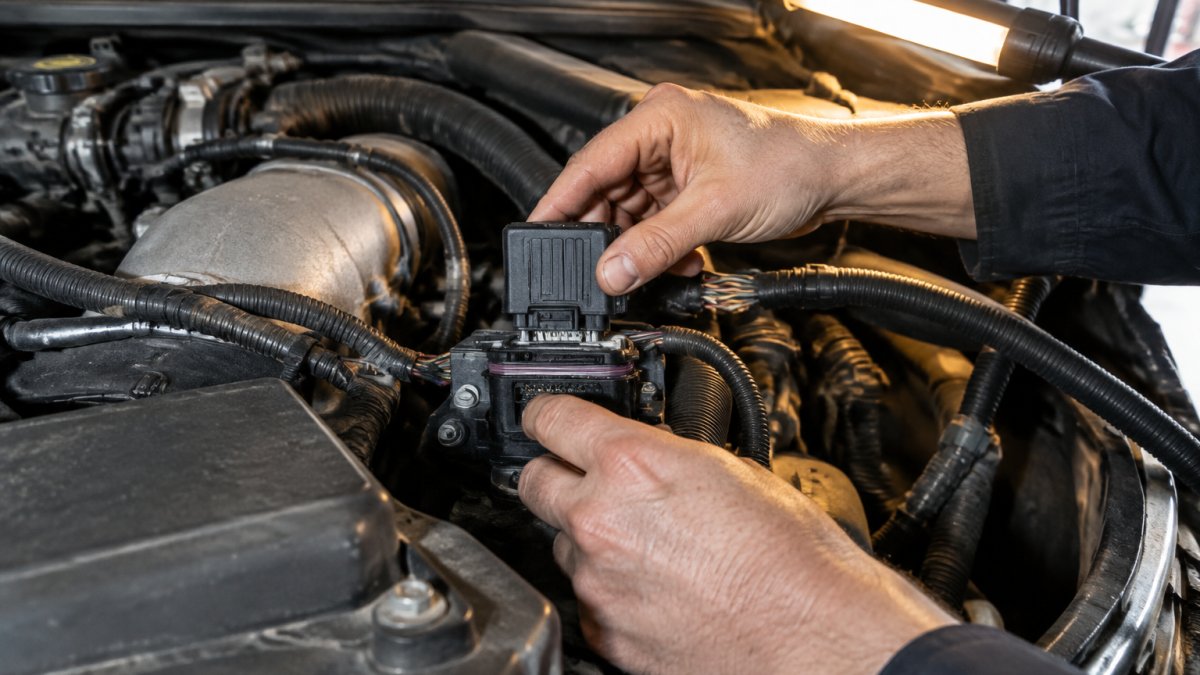
A chip works by giving the ECM a better set of instructions. The stock tune is conservative. A custom tune can sharpen injector pulse width and boost pressure for cleaner combustion.
The Impact of Tire Size on Diesel MPG
Tire size and weight change how hard the engine works, and they also change how you measure fuel economy. Most owners miss the second part.
The real impact of tire size on diesel MPG comes down to four things: weight, tread, gearing, and inflation.
- Weight: Every extra pound of tire and wheel takes energy to accelerate and keep rolling. A heavier tire is a flywheel you have to spin at every stop. On a 7.3L truck, a set of heavy mud tires can cost you a measurable amount of fuel in stop-and-go driving compared with a lighter all-season setup.
- Tread: Aggressive mud-terrain tread grips well off-road but drags more on pavement. The extra rolling resistance shows up as lower MPG on the highway, where most owners do their towing and cruising.
- Gearing: Oversize tires change your effective gear ratio. The engine turns fewer RPM for the same road speed, which can help highway MPG up to a point, but it also makes the truck work harder to hold speed on hills and under load. Go too tall and the transmission hunts for gears, which hurts fuel economy.
- Inflation: Underinflated tires add rolling resistance and cost you fuel. Check pressure cold, once a week, and adjust for the load you are carrying.
A common pattern is that owners go to a 35-inch tire for the look, then wonder why towing MPG drops.
Watch out: if you have already changed tire size, correct your odometer before you trust any MPG baseline.
Maintenance, Fluids, and Driving Habits That Cut Fuel Use
Fuel savings hide in the small stuff, but the small stuff has to be specific. Fresh fluids, clean filters, healthy sensors, and smarter driving habits often deliver gains that rival bolt-on parts, and they cost far less. This is also where most owners leave easy MPG on the table without knowing it.
Maintenance and Fluid Upgrades
Follow a real maintenance schedule. Change the oil with a quality synthetic oil, keep the fuel filter fresh, and service the transmission fluid on time. Each of these reduces drivetrain friction and keeps fuel delivery clean. A worn switch on your chip setup can also cause erratic tuning, so keep it in shape with the 7.3L Switch Service Kit.
Sensor Health: The Hidden MPG Killer
This is the part most articles skip. Aging sensors can drag fuel economy down without ever throwing a check engine light. The engine computer trusts them, so it keeps fueling based on bad data. Three sensors matter most on a 7.3L Powerstroke:
- MAP sensor (Manifold Absolute Pressure): Tells the computer how much boost the turbo is making. A lazy MAP sensor can make the computer misjudge load and fuel delivery.
- EBP sensor (Exhaust Back Pressure): Reads backpressure in the exhaust. A clogged or failing EBP sensor can make the computer think the engine is under more load than it is, which changes fueling and turbo behavior.
- IAT sensor (Intake Air Temperature): Reads the temperature of the air going into the engine. A skewed reading changes how the computer calculates air density and fuel quantity.
A common pattern is a truck that runs fine, has no codes, and still gets poor MPG. Cleaning or replacing a tired sensor is cheap compared with a tuner, and it restores the baseline the computer needs to fuel correctly. Check sensor health before you spend money on mods.
Driving Habits and RPM Management
RPM management matters more than most owners realize. Keep the engine in its efficient range, ease off the throttle, and cut idle time. Idling burns fuel for zero miles. Use cruise control on the highway and plan your stops.
- Ease into the throttle instead of stabbing it.
- Coast toward red lights.
- Cut warm-up idling in mild weather.
- Reduce aerodynamic drag by removing unneeded racks and loads.
Set Realistic Expectations
Be honest about what a 7.3L Powerstroke can do. It is a heavy, older diesel. A common pattern is that owners read forum posts claiming big MPG gains and then feel cheated when their truck does not match. Real-world MPG depends on load, terrain, tire size, and how you drive. Towing and hauling will always drink more fuel than empty cruising. Use your own baseline, change one thing at a time, and measure again.
Pick Your Tune and Start Saving Fuel
The best plan is a sequence, not a shopping spree. Here is how we would work through it:
| Step | What to Do | Why It Helps |
|---|---|---|
| 1 | Record a fuel baseline | Shows what actually changes |
| 2 | Fix filters, fluids, tire pressure | Removes hidden drag |
| 3 | Sharpen driving habits | Free gains, no parts |
| 4 | Add an economy tune | Biggest single lever |
| 5 | Recheck MPG after each change | Confirms real results |
If you are about to install your chip and the truck will not start, our troubleshooting answer on a 7.3L chip no-start covers the first thing to check.
Your truck can do better on fuel, but only if you measure first and tune second. At TS Performance, we have built 7.3L Power Stroke chips since 1997, with plug-and-play installs, six switchable tunes including an economy setting, and real technical support after the sale.
Frequently Asked Questions
Do performance chips actually improve 7.3L fuel economy?
Yes, when you pick the right tune. A chip like the TS Performance 6 Position Chip offers six switchable settings, from Stock through 140HP, so you can select the setting that suits your driving. The key is switching to the economy tune for daily commuting instead of leaving it on a high-power setting. Gains vary by truck condition, gearing, and how you drive, so a baseline test before and after tells you what actually changed.
How does the impact of tire size on diesel MPG work?
Larger or heavier tires raise rolling resistance and change your effective gear ratio, which makes the engine work harder to move the truck. Wider tread and aggressive mud-terrain patterns add drag on pavement. Keeping tires at the correct pressure, choosing a size close to stock, and avoiding unnecessarily heavy wheels all help. If you lift or regear, recalibrate your speedometer so your MPG math stays accurate.
What maintenance tasks matter most for 7.3L fuel economy?
Start with the fuel filter, air filter, and fresh synthetic oil, then check tire pressure weekly. A clogged fuel filter or dirty intake restricts fuel delivery and airflow, which forces the engine to work harder. Follow the maintenance schedule and log your MPG after each service so you can spot problems early.
Will a chip work on an older 7.3L that has been sitting a while?
A plug-and-play chip like the TS Performance Single Position Chip installs directly onto the PCM with no wiring or splicing, so it works on older trucks as long as the PCM and harness are healthy. Before installing, fix any existing issues: weak batteries, corroded contacts, or a failing sensor will mask the tune's benefits. Clean the PCM contacts with the included Scotch-Brite pad, follow the printed instructions, and test drive on the stock setting first to confirm the truck runs right.


Leave a comment
Comments will be approved before showing up.
Also in Questions & Updates


Tuning a Diesel Truck Without Deleting It: What Works


7 Ways to Increase Horsepower on Heavy Duty Trucks

