

Last Updated: November 20, 2026
Quick Summary
Yes, you can make diesel truck tuning gains without deleting the emissions system. An emissions-compliant tune keeps the DPF and EGR installed and working, while a delete removes them, which is generally treated as emissions tampering. Choose a tune that names the DPF and EGR as remaining in service, and check that it matches your exact engine and model year.
- An emissions-compliant tune keeps the DPF and EGR installed and operating.
- A delete removes or disables emissions hardware and is generally treated as tampering.
- Watch regeneration frequency and check for fault codes after installing any tune.
- Confirm the product lists your exact engine, year and model before buying.
- Save installation records and tune settings to protect your warranty position.
Table of Contents
- Can You Tune a Diesel Truck Without Deleting It?
- What Changes Between a Tune and a Delete
- How Tuning Works With the DPF and EGR Installed
- Choosing an Emissions-Compliant Diesel Tune
- Diesel Truck Tuning Legality and Emissions Tampering
- Warranty and Inspection Considerations After Tuning
- Installing Your MP8 Pro and Getting the Most From It
- Frequently Asked Questions
Can You Tune a Diesel Truck Without Deleting It?
Yes, you can tune a diesel truck without deleting its emissions equipment. An emissions-compliant tune keeps the diesel particulate filter (DPF), exhaust gas recirculation (EGR) system and other aftertreatment parts in place and working. Many owners want more power and smoother throttle response but do not want to remove emissions hardware, so this is the question most of them ask first.
At TS Performance, we work with diesel electronics, and the answer depends on the module, the truck and the tune itself. Some tunes are built to work with the factory emissions system intact. Others rely on removing it. Knowing the difference saves you from buying the wrong part.
This guide covers what separates a diesel truck tuning from a delete, how tuning interacts with the DPF and EGR, how to choose a compliant option, and what the legal and warranty picture looks like. Our goal is to help you make a decision you can defend.
What Changes Between a Tune and a Delete
A tune changes how the engine control module (ECM) calibrates fuel delivery, timing and boost. The emissions equipment stays on the truck and keeps operating. A delete goes further: it removes or disables the DPF, EGR valve or both, and then adjusts the calibration to match.
The practical difference shows up in three places. First, the legal status: removing emissions equipment from a road vehicle is generally treated as emissions tampering, which is why a delete is not an option for most owners. Second, the warranty and inspection exposure, since removed components are easy to spot. Third, the long-term behavior of the truck, because a delete changes how the engine produces and manages exhaust.
A common mistake is assuming that any product labeled "tune" is emissions-compliant. Read the product listing carefully and confirm whether it names the DPF and EGR as remaining in service. If the listing is vague on this point, treat that as a warning sign.
The table below summarises the key differences between an emissions-compliant tune and a delete, as covered in this section.
| Aspect | Emissions-compliant tune | Delete |
|---|---|---|
| Emissions equipment | DPF and EGR stay installed and operating | DPF, EGR or both removed or disabled |
| What changes | ECM fuel delivery, timing and boost calibration | Hardware removed, calibration adjusted to match |
| Legal status | Generally treated differently from tampering | Generally treated as emissions tampering |
| Warranty and inspection exposure | Factory components visible and in place | Removed components easy to spot |
| Long-term behavior | Exhaust managed by the original system | Exhaust production and management changed |
How Tuning Works With the DPF and EGR Installed
With the factory emissions system intact, the tune has to work inside the limits the emissions hardware needs. The DPF traps soot from the exhaust and periodically burns it off in a process called regeneration. Regeneration only happens when exhaust temperatures reach a certain range for a sustained period, and the ECM decides when to trigger it based on soot load, driving pattern and sensor readings. A well-designed tune keeps fueling and timing within ranges that let regeneration start and finish normally. An aggressive tune that pushes fuel and boost without regard for these limits can raise soot output, shorten the interval between regenerations, or cause a regeneration to start and then abort before it finishes.
The EGR system recirculates a portion of exhaust gas back into the intake to lower combustion temperatures and reduce nitrogen oxide formation. A compliant tune leaves EGR operation in place rather than disabling it. Owners sometimes notice that a tune changes EGR behavior slightly. What matters is that the system still functions and does not set fault codes.
A common pattern with emissions-intact tuning is that the truck behaves differently in three observable ways. First, regeneration frequency may shift: some tunes reduce soot output and stretch the interval, while others increase it. Second, exhaust gas temperature during regeneration can run higher or lower depending on the calibration. Third, the dash may show a regeneration-in-progress message at different times than before. None of these are automatically problems, but they are the signals to watch.
Watch out: if a check-engine light, a P2002-style DPF efficiency code, or a limp mode appears after tuning, stop and diagnose it before continuing to drive hard. A tune that repeatedly interrupts regeneration can load the DPF with soot faster than it can burn off, and that is the path to an expensive filter replacement.
For this reason, we recommend monitoring your truck after installation. Watch for check-engine lights, fault codes, reduced power or limp mode, and note any change in how the DPF regenerates. If any of these appear, address them before continuing to drive hard. A scan tool that reads live data, soot load, exhaust temperature, regeneration status, is the single most useful accessory you can add alongside a compliant tune.
Choosing an Emissions-Compliant Diesel Tune
Start by confirming the product is designed for your exact truck, model year and engine. Diesel platforms differ widely, and a tune built for one engine can perform poorly or cause problems on another. Check the compatibility list before you buy.
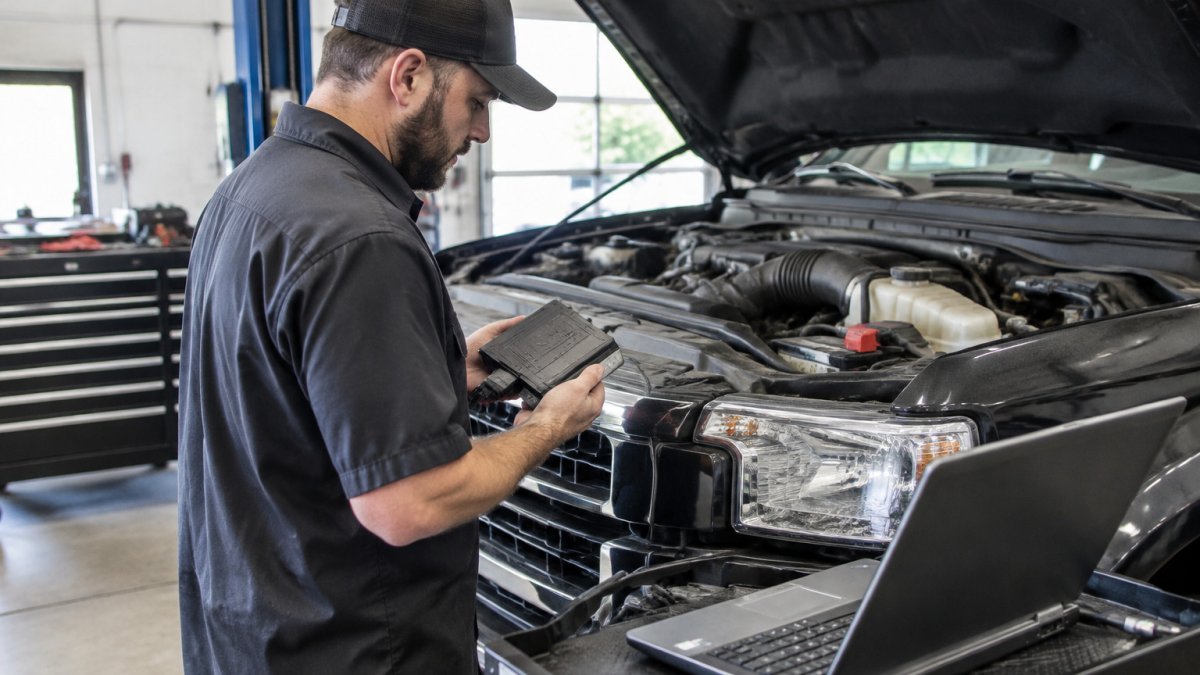
Next, look at what the tune actually changes. Compliant tunes should state that they keep the DPF and EGR operational. Ask whether the tune offers adjustable modes, since a setting that lets you choose between fuel economy, towing and maximum power can help you run the truck within safe limits for your use.
For a sense of how options compare, our MP8 Pro for Ford Powerstroke is built as a plug-and-play module for Powerstroke engines. If you have a deleted Ford Powerstroke and want performance back without the delete, you can explore the MPX module for deleted Ford Powerstrokes to see how it restores lost power. It offers adjustable performance settings. You can see the full MP8 Pro for Ford Powerstroke listing to check whether it matches your engine and model year.
Other diesel platforms have their own versions. Our Dodge/Ram module covers the 5.9L and 6.7L Cummins and the 3.0L EcoDiesel, and our Chevrolet/GMC Duramax module is calibrated for the Duramax platform. For Power Stroke trucks running a 6.0L PSD, the Chimera programmer provides FICM, ECM and TCM tuning with live data and datalogging. It requires an Android or iOS device.
What to Check Before You Install
Before installing any tune, work through this short checklist:
- Confirm the product lists your exact engine, year and model.
- Verify the tune keeps the DPF and EGR in service.
- Check the truck for existing fault codes and fix them first.
- Confirm the DPF regenerates normally before tuning.
- Review the warranty status of your truck (see the warranty section below).
- Read the installation instructions and know whether a shop is needed.
A no-start problem after installation is a concern many owners raise. The first thing to check in that situation is that the chip or module is correctly programmed and seated. Our FAQ on a 7.3L chip that won't start the truck walks through the initial troubleshooting steps.
Diesel Truck Tuning Legality and Emissions Tampering
Emissions law is complicated and varies by location, so this article gives general information rather than legal advice. In most jurisdictions, removing or disabling emissions equipment on a road-going vehicle is treated as emissions tampering. That is the core distinction between a legal, emissions-compliant tune and an illegal delete.
Tuning that keeps the emissions system operating is generally treated differently from removing it. However, rules differ by state, province and country, and some regions inspect vehicles for emissions components during registration or testing. Check the rules that apply where you drive. For official guidance, the [US Environmental Protection Agency's guidance on aftermarket defeat devices | epa.gov] is a useful starting point for American owners. Because emissions rules can also shape which maintenance and tuning choices are appropriate, Naked Frog Vehicle Tuning connects compliance considerations with keeping a high-mileage diesel’s DPF in service.
Off-road and competition use is handled differently again, and our off-road delete solutions are intended for vehicles used in those settings. The right choice depends on how and where your truck is driven.
Warranty and Inspection Considerations After Tuning
Warranty impact is one of the most common worries, and the answer depends on the tune, the truck and the claim. A dealer or manufacturer may deny a claim if they can show that an aftermarket part caused the failure. An emissions-compliant tune that keeps all factory components in place is generally easier to defend than one that removes them, because there is no missing hardware for a technician to point to.
Keep records from day one. Save the installation receipt, the tune version or firmware number, the settings you used, and any notes on when you changed modes. If a dealer later finds an aftermarket module during a service visit, documentation helps show what was installed and when. Our warranty, returns and service page explains the support terms and how to get help with a TS Performance product.
Inspection is the second half of the picture, and it is where a compliant tune earns its keep. Because the DPF, EGR and aftertreatment parts remain installed, a visual inspection sees the factory equipment in place. What an inspector or testing station may still check is whether the vehicle sets readiness monitors and whether any fault codes are stored. Before an inspection, scan the truck, confirm no emissions-related codes are pending, and confirm the monitors have completed their drive cycles. If a monitor is incomplete, drive the truck through a normal mix of city and highway operation until it sets.
Resale is the long-term consideration. A truck with a documented, emissions-intact tune and a clean scan history is easier to sell than one with removed hardware, because the buyer does not inherit an inspection problem. Keep the stock calibration information and any tuner documentation with the vehicle records so the next owner can see exactly what was done.
Watch out: do not assume that because a tune is emissions-compliant, every dealer will treat it the same way. Policies vary by manufacturer and by dealership, so ask your servicing dealer how they handle aftermarket calibrations before you install, not after a problem appears.
Installing Your MP8 Pro and Getting the Most From It
Most plug-and-play modules install without cutting or splicing wires, which keeps the factory harness intact. Follow the instructions for your model, confirm the module is seated, and start the engine. Watch the dash for warning lights during the first drive.
Get the most from the tune by choosing a setting that matches how you use the truck. A towing or hauling owner may prefer a mode focused on torque, while a daily commuter may want an economy-oriented setting. Switch modes only when your use changes, and avoid running maximum power continuously if your truck is working hard.
Our recommendation is to pair the module with routine maintenance. If you are unsure whether a particular module matches your truck, contact our technical team before you buy. A correct match is the best way to get reliable performance without the emissions trade-offs.
Ready to get more from your diesel without removing emissions equipment? TS Performance builds plug-and-play modules for Ford, Dodge, Chevy and GMC diesel trucks, with adjustable settings for daily driving, towing and hauling. Check compatibility and order today.
Frequently Asked Questions
Can you tune a diesel truck without deleting it?
Yes. Many diesel trucks can be tuned with the factory emissions equipment, including the DPF and EGR, still in place. An emissions-intact tune adjusts fueling, timing and boost within the factory system rather than removing components. Gains are usually more modest than with a delete, but the truck stays closer to its original configuration. Confirm that the specific tune and module are designed for your engine, model year and emissions setup before you install anything, since compatibility varies by platform.
Will a tune work with the DPF and EGR still installed?
A tune designed for an emissions-intact setup is built to work with the DPF and EGR still in place. These components are part of how the engine is calibrated, so the tune has to account for them, including regeneration behavior and exhaust temperatures. A tune that ignores them can cause fault codes or aftertreatment problems. Check that the product is explicitly described as emissions-compliant and matches your engine and model year.
Can tuning a diesel truck affect its factory warranty?
It can. Aftermarket tuning may give a dealer grounds to deny a warranty claim, particularly if the modification is linked to the failure. Warranty rules differ by manufacturer and by country, so read your warranty terms and ask the dealer before installing. Keeping the original calibration available and documenting the installation can help if a question comes up later. Speak with your dealer or a qualified adviser about your own situation.
How can I tell whether a diesel tune is emissions-compliant?
Look for a product description that says the tune keeps the factory emissions equipment in place and is intended for road use. Be cautious with listings that mention removing the DPF, EGR or other emissions parts, as those are delete tunes. Confirm the tune matches your engine, transmission and model year, and ask the provider what support they offer if a fault code appears after installation. Keep proof of the purchase and tune version for your records.


Leave a comment
Comments will be approved before showing up.
Also in Questions & Updates


How to Improve 7.3L Powerstroke Fuel Economy


7 Ways to Increase Horsepower on Heavy Duty Trucks

