

Last Updated: November 21, 2026
Quick Summary
A diesel performance shop needs hardware bought in sequence: diagnostics first, lifting and safety second, tuning hardware third, and fabrication or machine work last. Buy for the trucks you actually service, and move up a tier only when your current setup becomes the bottleneck.
- A scan tool must read engine, transmission, and body modules, not just engine codes.
- Log data before diagnosing to see what happens under load and save diagnostic time.
- A two-post lift is the backbone of most working shops, rated above your heaviest truck.
- Buy tuning hardware only after you know your top two platforms and the PCM code.
- Run the setup checklist audit every quarter instead of treating it as a poster.
Table of Contents
- What a Diesel Performance Shop Actually Needs
- Diesel Performance Shop Equipment by Shop Size and Budget
- Diesel Diagnostic Tools: Scan Tools, Data Logging and Fault Codes
- Lifting, Engine Handling and Heavy-Component Safety
- Diesel Fabrication Tools for Custom Work
- Tuning and Calibration Hardware for Cummins, Power Stroke and Duramax
- Fuel-System and Machine-Shop Testing Equipment
- Your Diesel Shop Setup Checklist
- Ordering Tuning Hardware for Your First Customer Build
- Frequently Asked Questions
What a Diesel Performance Shop Actually Needs
A diesel performance shop owner needs hardware that earns its keep: diagnostic tools that read every module on the truck, lifting equipment rated for heavy components, and tuning hardware that works across the platforms customers actually bring in. This guide breaks that down by shop size, service mix, and budget.
A common mistake is buying in the wrong order: shops spend on performance parts before they own the tools that tell them what the engine is doing.
Start with the tools that find problems. Add the tools that fix them. Buy the tuning hardware last, once you know which platforms you will actually service.
Match the hardware to the work you take in
A shop that only does bolt-on work and tuning needs a very different bench than one pulling cabs and rebuilding fuel systems. Write down the jobs you want to book in the next twelve months. Then buy for those jobs, not for the ones you might take someday.
If you plan to stay compliant and keep street trucks streetable, read up on tuning a diesel truck without deleting it before you commit to a service menu. That decision shapes everything downstream.
Diesel Performance Shop Equipment by Shop Size and Budget
Diesel performance shop equipment splits into three workable tiers, and each tier should pay for itself before you move up. The useful question is not "what should I buy?" but "what should I buy next?" Buy the tier that matches your current bay count and workload, then let utilization tell you when to graduate.
Three tiers: starter, working shop, full-service
| Tier | Typical Setup | Core Hardware | What It Unlocks | Move-Up Trigger |
|---|---|---|---|---|
| Starter | One bay, part-time | Quality scan tool, hand tools, jack and stands, basic tuning hardware | Diagnostics, simple tuning, maintenance | You are turning away engine-out or repeat tuning work |
| Working shop | Two to three bays | Two-post lift, engine hoist, data logging setup, wider tuning coverage | Engine work, repeat tuning customers | Lift and bay time are booked solid, and you outsource fuel-system or machine work weekly |
| Full-service | Four or more bays | Machine-shop equipment, fuel-system testing, fabrication bench | In-house rebuilds, custom work | Outsourced work exceeds what in-house capacity would cost to own |
A starter shop should not buy a machine shop. A working shop that keeps turning away engine-out jobs is leaving money on the bench. Move up when the current tier is the bottleneck, not before.
Buy in this order, not all at once
Within each tier, sequence purchases by what removes the most friction from your day. The order that works for most shops:
- Diagnostics first. A scan tool with full module coverage and live data. Without it, every other tool sits idle while you guess.
- Lifting and safety second. A lift rated for your heaviest truck, an engine hoist with a load leveler, and rated stands. This is what lets you say yes to engine work.
- Tuning hardware third. Only after you know which two platforms you actually see. Broad coverage before customers is shelf decoration.
- Fabrication and machine work last. These pay for themselves only when the work is regular, not occasional.
Watch out: buying tuning hardware before diagnostics is the most common order mistake.
How to decide when to move up a tier
Track two numbers: how often you outsource a job you wish you could do in-house, and how often a bay sits empty because you lack the equipment for a booked job. When either number stays high for a quarter, the next tier is justified. Until then, the partnership model, sending machine work or fuel-system testing to a local specialist, usually beats owning the equipment outright.
A starter shop should not buy a machine shop. A working shop that keeps turning away engine-out jobs is leaving money on the bench. Move up when the current tier is the bottleneck, not before.
Diesel Diagnostic Tools: Scan Tools, Data Logging and Fault Codes
Diesel diagnostic tools are the foundation of everything else. Without a scan tool that reads all the modules on a modern diesel, you are guessing, and guessing burns labor hours you cannot bill. A code reader and a full diagnostic bench are different tools, and the difference shapes how efficiently a shop works.
What a real diesel scan tool must cover
At minimum, you need a scan tool that reads fault codes across engine, transmission, and body modules, plus live data you can watch while the truck runs. On modern diesels, that means coverage of the ECM, TCM, and the body and chassis modules that often set the code that sends the truck to your bay. Check module coverage before you buy.
Watch out: buying a scan tool that only covers engine codes will send you to a dealer for every transmission complaint. The tool that reads the most modules on the trucks you actually see is worth more than the one with the longest feature list.
Data logging: the part most shops underuse
Data logging matters more than most new shops realize. A fault code tells you where to look. A data log tells you what happened on the road, under load, at temperature. The practical setup is a scan tool or tuning interface that can record live parameters, fuel pressure, boost, rail pressure, throttle position, while the truck is driven, then replay them side by side with the customer's complaint.
A common pattern is to log first, then diagnose. The log often shows whether the problem is a sensor reading, a fuel-delivery issue, or a calibration problem before you touch a wrench. That order saves diagnostic time you can bill or reinvest.
Calibration and programming interfaces
Diagnostics and calibration are two halves of the same bench. Reading codes is diagnostics; writing calibrations is calibration. Modern diesel work often needs both, and the interface you use for tuning should also support data logging and module communication. For Power Stroke work, the Chimera 6L Power Stroke Tuner covers FICM, ECM, and TCM tuning with live data and datalogging, run from a phone, tablet, or laptop. For the 7.3L trucks, the TS Performance 7.3L 6 Position Chip gives six switchable tunes on the fly, from stock through economy and up to the higher power settings, with a plug-in installation at the PCM.
Calibration work often needs modules unlocked first. Our ECM unlock service handles that step so you can get to the tuning.
Repair information and wiring diagrams
Wiring diagrams and repair information round out the diagnostic bench. Budget for a subscription, not a one-time purchase. The subscription is what turns a fault code into a repair path, pinouts, connector locations, and module communication maps. A shop with a good scan tool and no wiring information still stalls on electrical faults. When wiring information narrows an electrical fault to a system, Fairfield Truck Repair can be the next point of reference for tracing diesel engine issues across a fleet.
Platform coverage: buy for the trucks you see
Cummins, Power Stroke, and Duramax each need their own coverage, and no single tool covers all three equally well. Write down the platforms that come through your door most often, then buy the diagnostic and calibration hardware that covers those two best. Broad coverage before you have the customers is how shops end up with hardware on a shelf.
A practical diagnostic bench is therefore three things working together: a scan tool that reads every module, a logging setup that captures what happens under load, and repair information that turns the log into a repair. Buy them in that order and the rest of the shop gets easier.
Lifting, Engine Handling and Heavy-Component Safety
Lifting and engine handling hardware is where shops cut corners and regret it. A diesel engine block is heavy, awkward, and unforgiving. The lift, the hoist, and the stands all need to be rated well above what you plan to pick up.
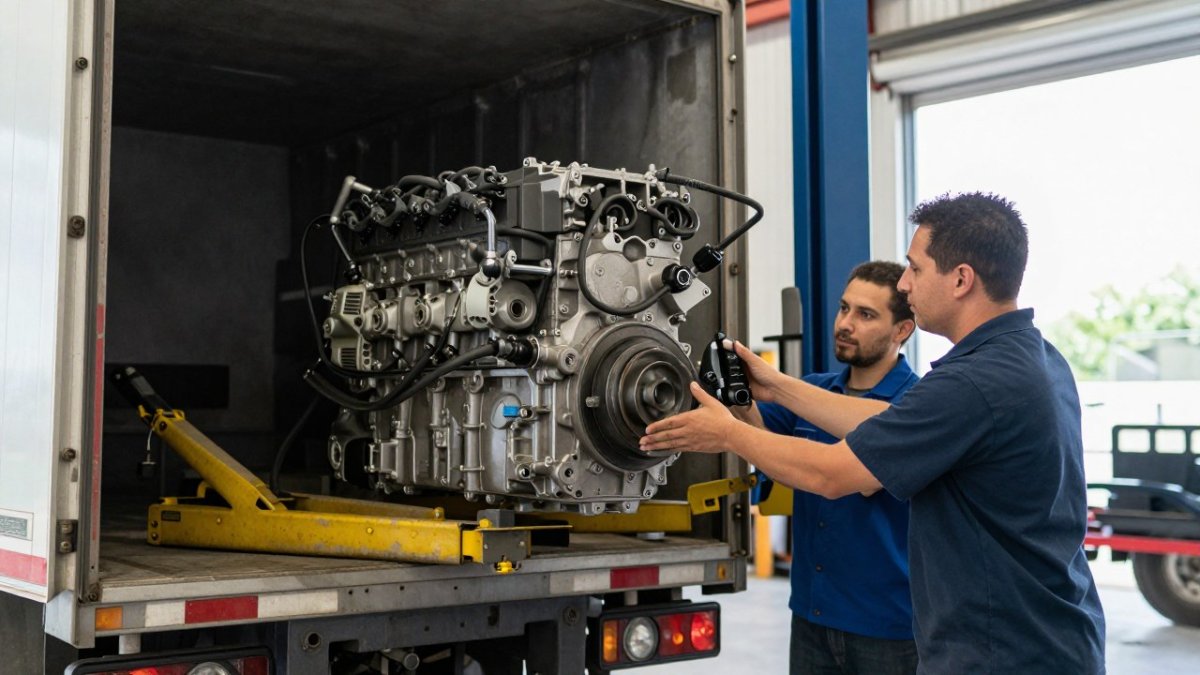
A two-post lift is the backbone of most working shops. Add an engine hoist with a load leveler, quality jack stands, and transmission support. Inspect lifting gear on a schedule and log it. A failed sling or a cracked weld is not a maintenance item you want to discover mid-lift.
Train everyone on load limits and never let a helper stand under a suspended load. Safety habits are cheaper than a claim.
Diesel Fabrication Tools for Custom Work
Diesel fabrication tools turn a repair shop into a shop that can build. If customers ask for custom intake piping, brackets, or exhaust work, the fabrication bench pays for itself quickly.
The core setup is a welder suited to the materials you work with, a band saw or chop saw, a drill press, and a solid bench with good lighting. Add a tube bender and notcher when custom piping becomes regular work. A plasma cutter speeds up bracket and plate work but is not the first purchase.
What most guides miss is how much fabrication work starts as a repair. A cracked mount or a broken bracket is a fabrication job before it is anything else. Shops with a bench can keep that work in-house.
Tuning and Calibration Hardware for Cummins, Power Stroke and Duramax
Tuning and calibration hardware is the last tier, and it should match the platforms you actually see. Cummins, Power Stroke, and Duramax each need their own coverage, and buying broad before you have the customers is how shops end up with hardware on a shelf.
For Power Stroke work, the Chimera 6L Power Stroke Tuner covers FICM, ECM, and TCM tuning with live data and datalogging, run from a phone, tablet, or laptop. For the 7.3L trucks that keep coming through the door, the TS Performance 7.3L 6 Position Chip gives six switchable tunes on the fly, from stock through economy and up to the higher power settings, with a plug-in installation at the PCM.
Calibration work often needs modules unlocked first. Our ECM unlock service handles that step so you can get to the tuning.
Fuel-System and Machine-Shop Testing Equipment
Fuel-system and machine-shop testing equipment is the deep end of the pool. This is where a full-service shop separates itself from a parts-swapper.
Fuel-system testing means you can measure pressure and flow rather than guess. Common rail systems punish guesswork, and a component that tests fine on the bench saves you from replacing parts that were never the problem.
Machine-shop equipment covers boring, honing, surfacing, and valve work. It is a serious investment and only makes sense when engine rebuilds are a regular part of your book. Until then, partner with a local machine shop and keep the relationship warm.
Your Diesel Shop Setup Checklist
Use this diesel shop setup checklist to audit what you have and what you still need. Work top to bottom and do not skip ahead.
- Confirm the service menu you plan to sell
- Scan tool with full module coverage and live data
- Data logging setup and repair information subscription
- Two-post lift rated for your heaviest truck
- Engine hoist, load leveler, and rated jack stands
- Lifting gear inspection schedule and log
- Hand tools and torque wrenches, calibrated
- Fabrication bench with welder and saw
- Tuning hardware matched to your top two platforms
- Fuel-system testing or a machine-shop partner
- Parts sourcing and compatibility check process
- Billing and labor time tracking in place
Run the audit every quarter. A checklist you never revisit is just a poster.
Ordering Tuning Hardware for Your First Customer Build
Order tuning hardware only after you know the truck, the PCM code, and the customer's goal. That order of operations prevents the most common first-build headache: hardware that arrives and does not match the vehicle.
Before you order, confirm the vehicle details, decide which tunes the customer actually needs, and check compatibility with any supporting modifications already on the truck. If the build centers on a 7.3L, our buying guide for the best chip for the 7.3L Powerstroke walks through install and tune selection so you can order with confidence.
Then install, test, and log the result. A first build that goes smoothly becomes a repeat customer and a referral.
Building a diesel performance shop is a sequence problem, not a shopping problem. Buy the tools that find work, then the tools that do the work, then the tuning hardware that keeps customers coming back. TS Performance has supplied chips, modules, and tuning hardware since 1997, including the Chimera tuner with FICM, ECM, and TCM tuning, the 7.3L 6 Position Chip with six switchable tunes, and ECM unlock service to get calibration work moving. Get started with TS Performance and equip your shop for the trucks you actually service.
Frequently Asked Questions
What equipment does a diesel performance shop need to get started?
Start with the basics that cover most jobs: a two-post lift rated for heavy trucks, a quality scan tool with data logging, a laptop for calibration work, hand tools up to 1 inch drive, torque wrenches, and a fuel-pressure test kit. Add a welder and a bandsaw if you plan to take fabrication work. Build the rest of the list around the trucks you actually see, not the trucks you hope to see.
What diagnostic tools do diesel performance shops use most?
A scan tool that reads fault codes and streams live data is the workhorse. Shops also rely on fuel-pressure and compression test kits, a good multimeter, and a laptop for data logging and calibration files. Make sure your scan tool covers the platforms you service: Cummins, Power Stroke and Duramax each need different coverage.
How do I choose hardware for diesel tuning and performance upgrades?
Match the hardware to the engine and to what the customer wants from the truck. A 7.3L Power Stroke responds well to a plug-in chip with switchable tunes, while later Power Stroke generations often use a module that adjusts fuel delivery. Confirm the part is built for that engine code before you quote the job, and check that supporting modifications, like exhaust and intake, can handle the extra power.
What safety equipment should a diesel performance shop have?
At minimum: rated lift posts inspected on a schedule, wheel chocks, safety glasses, heat-resistant gloves, a fire extinguisher rated for fuel and electrical fires, and proper ventilation for exhaust fumes. Engine hoists and stands need a load rating above the heaviest engine you handle. Train every technician on lifting and blocking procedures before they touch a heavy component.
How should a diesel shop organize its tools and work bays?
Give each bay a fixed purpose: one for diagnostics and tuning, one for lift work, one for fabrication. Keep diagnostic tools on a rolling cart so they move with the job. Store heavy tooling near the bay where it is used, and label drawers by system, such as fuel, air, and electrical. A clean, predictable layout cuts the time technicians spend hunting for tools on every ticket.
What fabrication tools are needed for custom diesel work?
A MIG welder handles most exhaust and bracket work, with a TIG welder for thinner material and cleaner joints. Add a metal bandsaw, a drill press, an angle grinder, and a bench vise. A tube bender and notcher pay for themselves once you start building intake and exhaust piping. Keep a layout table and measuring tools close by so parts stay square before welding.


Leave a comment
Comments will be approved before showing up.
Also in Questions & Updates


Best Diesel Performance Chips for Hauling: 6 Top Picks


Do Diesel Tuners Void Factory Warranties? What Owners Need to Know

